

A free job application tracker should answer three questions without sending you back through email, downloads, and browser history: what did I send, what happened, and what should I do next? That requires more than a list of company names. Each opportunity needs its own record containing the vacancy, the submitted resume and cover letter, the application date, the current status, and one concrete next action.
You can build that record with folders and a spreadsheet, or use a workspace such as CVura to connect the pieces. The tool is secondary to the discipline. Freeze the submitted documents instead of overwriting them, record events when they happen, and prepare for an interview from the exact claims the employer received. The workflow below remains useful even when an application portal provides no status updates.
Use a free job application tracker as one record per role
Create a separate record as soon as a role becomes serious enough to consider. Capture the employer, exact job title, location or work arrangement, source URL, date found, and deadline. Save the complete vacancy because postings can be edited or removed. If a recruiter introduced the role, add the recruiter's name and the channel they used. This basic context prevents two similarly named positions from becoming one blurred memory.
Give the record a stable name that will still make sense months later, such as employer, role, and posting month. Use the same identifier for its folder, notes, and calendar entry. Do not use a status as the name because status changes. A record called Northstar Product Manager 2026 09 remains findable whether it is saved, submitted, interviewing, or closed.
Record where the application was actually completed. A job board may lead to an employer portal, and the two systems may not share status information. Indeed explains that its own job area does not provide a complete application history, which is one reason a separate application record can remain valuable. Store the confirmation reference without copying sensitive portal credentials into your tracker.
- Employer, exact role title, location, and source
- Original vacancy and application deadline
- Contact person and communication channel
- Current status, last event, and next action
Freeze the complete submission package
The submitted resume version is an artifact, not a living draft. Once it leaves your device, save an unchanged copy beside the vacancy. Do the same for the cover letter, portfolio selection, writing sample, certificates, and any substantial answers entered into the form. If a portal does not provide a copy, make brief notes about the answers you gave without storing protected or unnecessary personal information.
Use descriptive file names instead of final2 or latest. A practical pattern is name, employer, role, document type, and submission date. Keep the editable source separately so future improvements do not alter the historical record. When you correct a typo later, the archived submission should still show what this employer received; your master document should contain the corrected version for the next role.
This is not administrative perfectionism. Tailored resumes may emphasize different projects, metrics, or skills. Without version control, you can prepare an interview around a bullet that never reached the employer or forget the context behind one that did. Europass similarly describes application folders that can keep opportunity details, deadlines, tailored CVs, cover letters, and supporting documents together for a specific application.
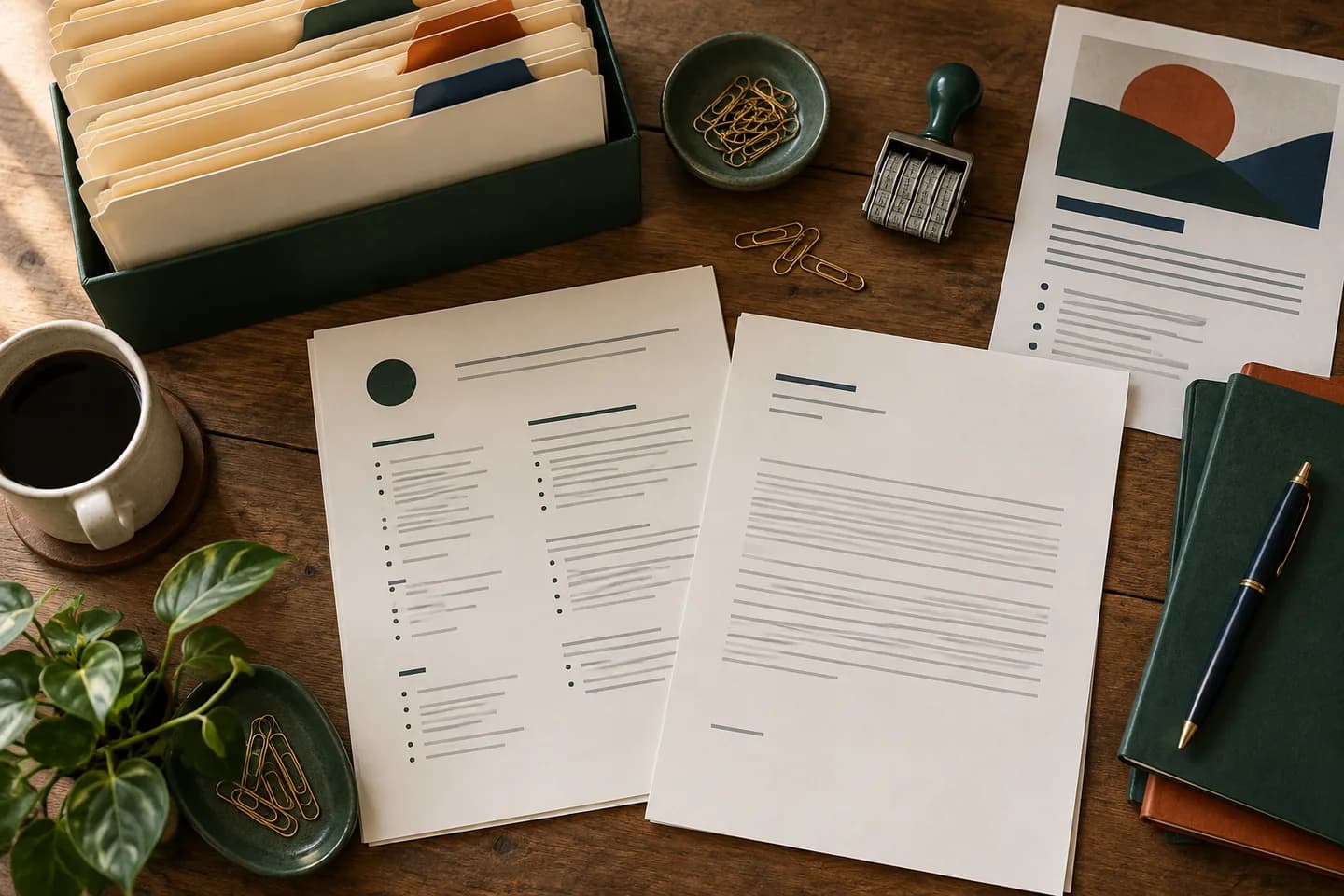
Track job applications with statuses that lead to action
A status should describe an observable stage, not an optimistic interpretation. A small set is usually enough: considering, preparing, submitted, interview, offer, closed, and withdrawn. Add a reason when a record closes, such as employer rejection, role removed, accepted another offer, or no longer relevant. Avoid inventing intermediate stages such as shortlisted unless the employer actually communicated them.
Pair every active status with the date of the last event and one next action. A submitted application might say wait for stated review period until 18 September; an interview record might say send requested work sample by Tuesday. If there is no useful action, record that explicitly. This keeps the tracker from turning into a dashboard full of items that look active but have no decision attached.
Update the record from direct evidence: a confirmation email, recruiter message, calendar invitation, portal notice, or your own completed action. Separate facts from notes. Recruiter said decisions next week is a fact you can date; probably progressing is speculation. A clean distinction reduces anxious checking and makes a later weekly review much faster.
Connect the documents and next action without losing control
In CVura, the practical unit is the opportunity rather than an isolated file. You can save the role, attach or identify the exact resume and cover letter, keep useful notes and contacts, record the stage, and define the next action. That makes the application tracker the bridge between creating a document and preparing for whatever follows.
The app does not submit an application on your behalf, read every employer portal, or guarantee that a status is current. You remain responsible for sending the correct file, verifying any imported or suggested information, and updating the record when an employer responds. That boundary matters because a quiet dashboard cannot prove that a recruiter has not acted, and an automated label should never replace a real message.
Use the workspace to reduce retrieval work, not to manufacture activity. Save the confirmation, point to the frozen submission, and write one short next step. If you prefer a spreadsheet, use the same structure. The advantage of a connected workspace is that the documents, role context, contacts, interview notes, and deadlines remain attached instead of being distributed across unrelated rows and folders.

Plan follow up from the employer's timeline
A follow up tracker should begin with the instruction you already have. Record the closing date, any review period stated in the confirmation, and the contact channel the employer provided. If the posting says candidates will hear back within two weeks or asks applicants not to call, use that information. A reminder is there to help you act professionally, not to create a message simply because a week has passed.
When a follow up is reasonable, keep it brief and specific. Identify the role, mention the application date, reaffirm interest, and ask whether an updated timeline is available. Do not resend every document unless requested. Log the date and channel after sending, then set a realistic review date. Repeated messages without new information can consume attention while adding no value to the employer.
After an interview, record what the interviewer said about timing and the next stage before memory fades. Send a thank you when appropriate and note any promised materials. If the employer misses its own timeline, one courteous inquiry may be useful. After that, decide whether to leave the record open with a later review date or close it so the tracker reflects opportunities you can still influence.
Prepare from the resume version the employer received
When an interview arrives, open the archived vacancy and exact submitted package before drafting answers. Highlight the three or four claims most likely to prompt questions. For each, prepare the situation, your responsibility, the action you took, and the result you can support. If the tailored resume shortened an example, restore the missing context in your notes without changing the facts.
Compare the vacancy with the submitted resume again. Note strong matches, transferable evidence, and genuine gaps. Prepare concise explanations for the gaps rather than improvising a stronger history. The goal is consistency: your spoken account should deepen what the document says. It does not need to repeat the bullet word for word, but dates, ownership, scope, and outcomes should agree.
Attach the interview date, format, location or meeting link, participants, and questions you want to ask to the same opportunity. CVura's interview question guide can help you structure practice, but the role record supplies the evidence that makes an answer relevant. Test logistics separately so the application notes remain focused on the conversation itself.

Run a short weekly review instead of checking constantly
Choose one regular time to review active applications. Start with deadlines and scheduled interviews, then promises you made, employer timelines that have passed, and records with no next action. Close duplicates and stale saved roles. This order protects commitments before you spend time interpreting response rates or adding more applications.
Look for process patterns, not verdicts about your value. Several missed deadlines may indicate that too many roles are being prepared at once. Repeated uncertainty about which resume was sent reveals a version control problem. Few responses can justify reviewing targeting, evidence, or document quality, but the tracker alone cannot tell you why an employer decided as it did.
Keep the review short by requiring every active record to end in one of three states: a dated action, a deliberate waiting period, or closure. Archive rather than delete completed records when retaining them is lawful and useful. Periodically export or back up the minimal record you need, and remove sensitive material that no longer has a purpose.

Use a minimum application tracking checklist
Before you call the system complete, test it with a real scenario. Imagine a recruiter calls about a role you submitted three weeks ago. Can you find the original vacancy, the exact resume and cover letter, the application date, the contact history, and your current next action within two minutes? If not, simplify the naming or bring scattered records together.
Then check accuracy. Dates should represent real events, statuses should be supported by messages or your own actions, and the archived file should match the attachment that was sent. Open it rather than trusting the file name. If you used a portal, compare your saved notes with its confirmation. Correct the record without rewriting history when something is wrong.
The best free job application tracker is the one you will update at the moment of action. Start with the minimum fields, add detail only when it changes a decision, and keep the exact submission immutable. That gives you a dependable answer when an employer calls and a calm place to decide what deserves attention next.
- Vacancy and deadline saved
- Exact resume, cover letter, and supporting files frozen
- Submission date, channel, and confirmation recorded
- Current status, last event, and next action dated