
Interview notes can help a candidate remember a question or recover the thread of a real example. They become less useful when they turn into pages of polished answers that compete with the conversation. The practical question is not how much you can write down. It is what you need to recall, whether the interview permits that reference and how you will keep listening while using it. A small, clear brief can support preparation even when it stays in your bag during the meeting.
This free guide uses an ordinary notebook or sheet of paper. It separates preparation prompts, notes taken during the conversation and the debrief written afterward. These have different purposes and should not become one sprawling script. One page is a useful working constraint, not a rule imposed on every candidate or every interview. Follow the employer's instructions, including any assessment conditions. A notebook does not guarantee permission to consult it, a stronger answer or a particular hiring result.
Interview notes start with the meeting's actual rules
Read the invitation for the interview format, any exercise and the materials requested. A discussion about your experience is different from a supervised assessment with specified resources. Do not assume that an open-book practice method is allowed in a timed test. When the instructions are unclear, ask the organizer whether you may bring or consult a short page of questions and reminders. Describe the proposed material plainly instead of asking a vague question about using help.
At the start of an ordinary conversation, you can ask whether it is all right to jot down a few points. Keep consulting prepared prompts separate from recording the interviewer. Permission for one activity does not automatically include the other. This guide concerns brief written notes, not an audio recording, transcription service or hidden assistance. If the interviewer gives a different instruction, put the reference away and continue with the conversation or ask how to handle the specific need.
If you need an accessible format or assistive technology, discuss the arrangements through the appropriate contact beforehand. You do not need to turn a small planning question into a detailed account of private circumstances. Establish what material or equipment will be available and which conditions apply. Preparation remains worthwhile even if notes cannot be used live: the process of choosing evidence, checking details and rehearsing flexible explanations still gives your practice a clear direction.
Select a few evidence cues instead of complete answers
Start with the role's responsibilities and your own relevant experiences. For each possible example, write a short label that you will recognize, followed by your actual contribution and the result you can support. A cue such as 'volunteer rota: checked changes, flagged clashes, updated team' can be more usable than a paragraph of memorized language. This example is fictional; choose an experience that really happened and keep its context visible rather than inventing a stronger job title.
Check the details while you prepare, rather than trying to reconstruct uncertain facts under pressure. Confirm dates, project status and which part of a team effort was yours. If you cannot support a number, do not add it just to make the page look complete. A personal-project example can be relevant without being presented as paid employment. Note its genuine scope and what was produced, then leave room to explain limitations in your own words.
Give different cues different jobs. You may want one example about solving a problem, another about working with others and a third about learning something unfamiliar. You do not need a separate story for every possible question, and the same experience can illuminate several aspects. The page should help you choose the relevant angle after hearing the question. It should not push the same rehearsed story into every answer regardless of what the interviewer actually asked.

Build a brief that you can navigate at a glance
Divide the page into a few recognizable areas: role context, example cues, questions and space for new information. Use headings that make sense to you and leave enough blank space to distinguish them. The aim is quick retrieval, not squeezing the maximum amount onto a page. If the text becomes tiny or every margin contains an extra answer, reduce the material. A longer private preparation document can stay separate from the reference you plan to bring.
Keep essential logistics elsewhere if they would crowd the discussion prompts. The address, joining link, contact details and travel plan need to be available when relevant, but you do not have to display private contact information throughout the meeting. Avoid copying confidential workplace documents into the brief. Usually a neutral description of an example is enough to remind you what happened. Use descriptions you are permitted to discuss and do not include another person's personal details merely because they appear in your source notes.
A simple layout might place the role and interview purpose at the top, three short example labels on the left and a few questions on the right. Leave the bottom clear for a next step or an unfamiliar term to clarify. Treat that arrangement as an experiment, not a required template. Open the page during practice and locate a prompt without scanning every line. If you cannot find it quickly, change the labels or remove lower-priority material.
Keep questions specific enough to support a decision
Prepare questions that help you understand the actual work rather than questions chosen only to sound impressive. You might ask how responsibilities are divided, what support is available while learning the role or how priorities are agreed. Connect each question to something you genuinely need to understand. Read the public role information first so you do not spend limited discussion time asking for a detail already answered clearly in the invitation or vacancy.
Write short question cues and leave room for the response. 'First priorities: who sets them?' is easier to locate than a carefully scripted speech introducing the question. If the interviewer answers it earlier, mark it as covered instead of asking it again unchanged. You may still have a useful follow-up, but make clear what you understood and what remains uncertain. The brief should help you respond to the conversation rather than force a predetermined sequence.
Separate confirmed facts from your interpretation. If someone describes a possible project, do not record it as a guaranteed assignment. If the team uses an unfamiliar term, ask what it means in that context rather than silently translating it into your own experience. A note can simply say 'clarify ownership of weekly report'. That is a question for later discussion, not evidence that you have been assigned the responsibility or that the employer has made an offer.
Rehearse speaking from cues, then put the page down
Test the page with a friend or by answering an ordinary practice question aloud. Glance at one cue, put the page down and explain the example in a way that addresses the question. Then try a different question that calls for another aspect of the same experience. You are checking whether the labels recover useful information, not whether you can reproduce the same wording. If you keep reading complete sentences, replace them with shorter prompts.
Practice a brief opening separately from the evidence bank. The self-introduction guide can help you identify a relevant thread without turning the opening into a recital of your whole history. Your reference page may need only a few words reminding you of that thread. It should not contain an answer that you must finish even after the interviewer redirects the discussion or asks a more specific question about your background.
Include honest limits in rehearsal. For example, you can explain what you learned from a difficulty without pretending that it has disappeared. The weakness-answer planning guide develops that distinction. A useful cue might remind you of the action you took and the remaining limitation. Avoid writing a flattering label that you cannot explain under follow-up questions. The purpose of practice is flexible recall, not disguising uncertainty behind a polished script.

Use brief notes without losing the conversation
Listen to the complete question before reaching for a prepared example. You may need a pause or a clarification more than you need a note. If consulting your reference is permitted, use it briefly and return to the discussion. You do not need to keep writing to prove that you are paying attention. When you want to capture an important point, a few keywords can preserve the reminder without attempting a transcript of everything being said.
In a video meeting, test where the paper sits so that it is readable without covering equipment or interrupting your use of the screen. Do not hide prohibited assistance or pretend to be answering without resources when the exercise has different conditions. Tell the interviewer if a brief pause is needed to note a next step. If you use digital notes with permission, keep unrelated windows and notifications out of the working area rather than switching between documents throughout an answer.
Write only what you need to understand the role and follow through. If the discussion turns to information that should not be copied, stop and ask what you may retain. Do not collect private details about other candidates or employees. A concise note such as 'send permitted example through portal' may be enough. Before the meeting ends, clarify the action, responsible person and stated timing; avoid converting an approximate possibility into a fixed commitment that nobody actually made.
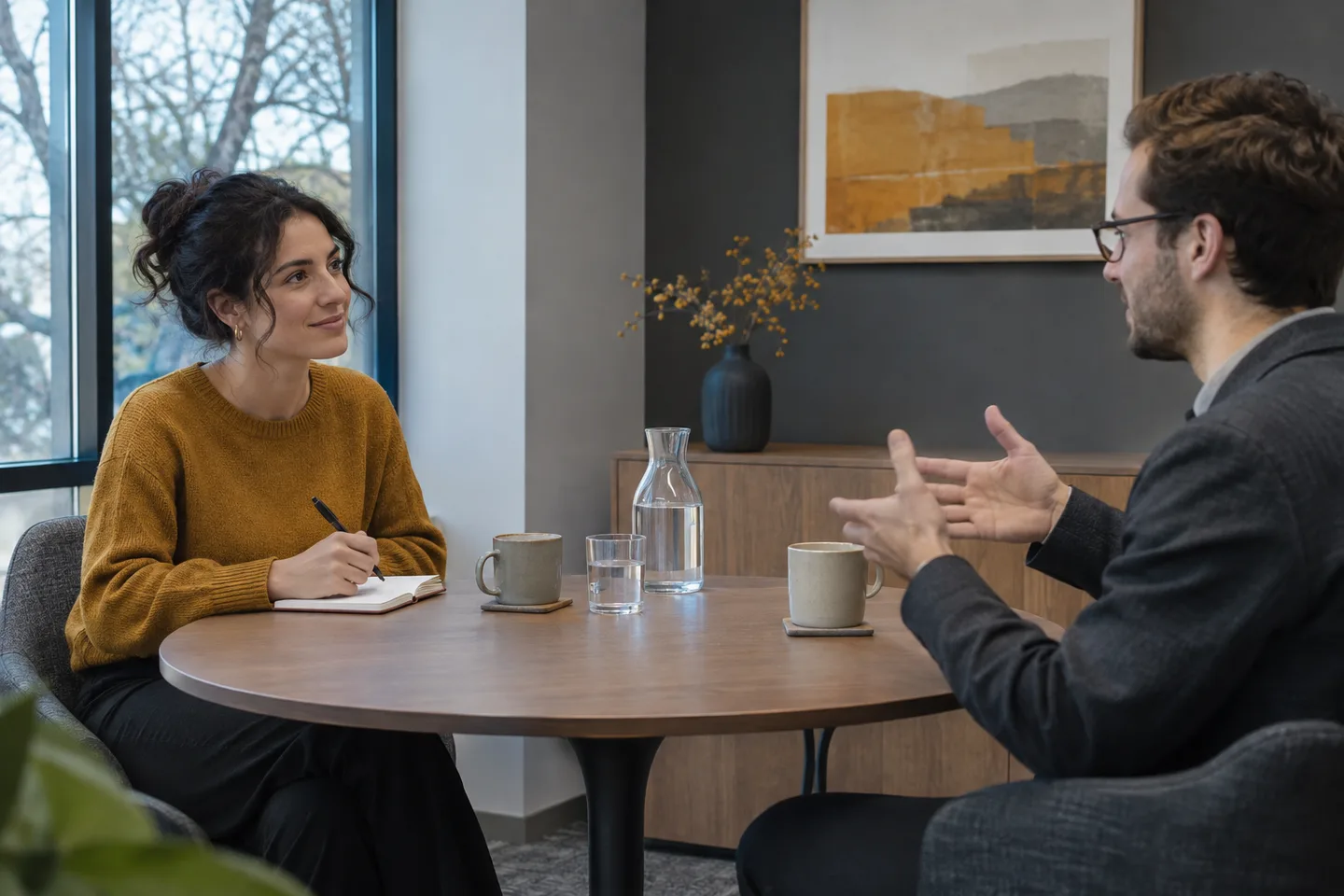
Write a factual debrief while the details are fresh
Afterward, separate three things in your private record: what was said, what you think it means and what you still need to ask. Add a short account of the role information you learned and the examples you discussed. Mark uncertain recollections as uncertain. Do not turn your impression of a friendly conversation into a prediction about the decision. The record is a planning aid for you, not a scorecard proving what the employer intends.
Record agreed next steps in the wording you can support. If you were asked to send something, note the permitted destination and any stated deadline. If no date was given, leave it open rather than inventing one. Review the notes before preparing a follow-up so the message reflects the actual conversation. Keep the brief associated with the right application; similar interviews can otherwise become mixed together, especially when you are speaking to several organizations during the same week.
Finally, decide what to retain and remove unnecessary sensitive material from the working notes. You may want a few useful lessons for later practice, but you do not need an expanding archive of every personal detail mentioned. Revise the preparation method for your next interview: which cues helped, which questions became clearer and where the page got in the way? A useful brief becomes simpler through that review. Its success is helping you listen, recall and follow through accurately, not guaranteeing a job.